

Paddle Duel Strategy: How to Beat a CPU That Gets Faster Every Rally
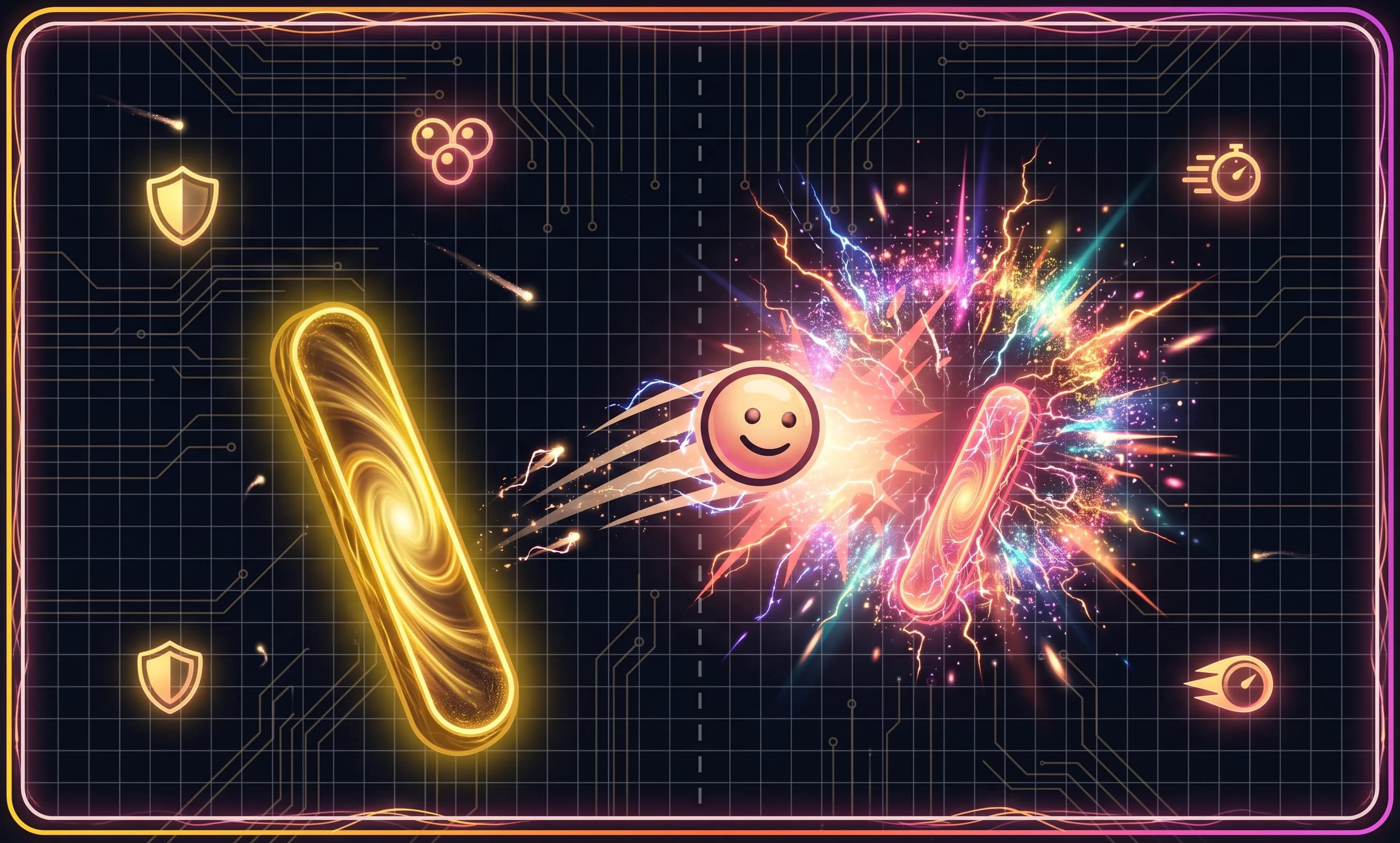
Written by the Playaby team. We build every game on this site ourselves and play through each one while writing its guide, so the tips above come from actually testing the mechanics — not generic advice.
Paddle Duel is the oldest game on the site by design, but it's not just a nostalgia piece. The rally-based speed ramp and the way paddle contact bends the ball's angle mean a long point against a good CPU is a genuinely different game from the first exchange of a match. Most players lose not because the CPU cheats, but because they keep returning the ball the same flat way while it keeps getting faster.
- The ball speeds up with the length of the current rally, not with the score — the BALL SPEED meter under the board climbs the longer a single point drags on, and it resets back down to the slower baseline the moment a point is scored, so every fresh rally starts even no matter how frantic the last one got.
- Where you hit the paddle matters more than whether you hit it. Dead-center contact sends the ball back nearly flat, which is the easiest shot for an alert CPU to track. Catching it near the top or bottom edge bends the return at a much sharper angle, and moving your paddle into the ball at the moment of contact adds even more bite on top of that — a paddle in motion sends the ball off sharper than one just sitting still in the right spot.
- Steep angles beat raw speed. The CPU has to physically travel to meet the ball, so a shot angled hard toward the top or bottom of the court forces it to cover more vertical ground than a flat shot would in the same time. A fast, flat shot down the middle is often easier for the CPU to track than a slower one buried in a corner.
- The three difficulty levels change more than just speed. Easy, Medium, and Hard each adjust three things at once: how fast the CPU paddle can move, how quickly it reacts once the ball crosses the midline, and how much random error gets mixed into its prediction of where the ball will land. Easy reacts late and misjudges often, which is why edge-clipping shots sneak past it; Hard reacts almost instantly with very little wasted motion, so beating it comes down to angle and paddle-edge contact rather than reflexes.
- Switching to 2-player mode removes the CPU's one real weakness. The error margin baked into Easy and Medium is what lets risky-looking shots work against the computer — a human opponent tracks a steep angle just as well as a flat one, so the edge-of-paddle and paddle-movement tricks that win free points against the CPU just become a normal rally against another person.
Why the speed reset matters more than it looks
It's easy to miss just how much the per-rally reset changes the shape of a match. Because the ball drops back to baseline speed the instant a point ends, a match can genuinely swing between a slow, cautious opening exchange and a frantic 15-hit rally two points later, with no gradual ramp connecting the two — speed is a property of the current rally, not the match as a whole. That means every single point effectively starts on equal footing regardless of how chaotic the previous one got, which is exactly why a player who fell behind early can still claw back into a match: nothing about a bad rally two points ago carries forward into the next one.
This also explains why watching a skilled player against the Hard CPU looks so different from a beginner match. Skilled play tends to end rallies quickly, either by winning the point outright with a sharp angle or losing it fast to a CPU mistake-punish, so the BALL SPEED meter rarely climbs very high in a well-played match between two strong players. Long, escalating rallies are actually more a sign of two evenly matched but less precise players trading flat returns back and forth than a sign of high-level play — the meter climbing to its cap is usually a symptom of both sides missing their angle, not a badge of skill.
First to 10 wins the match, and the games that get there fastest are rarely the ones with the longest rallies — they are the ones where one side keeps finding a sharper angle than the other can cover. Watch the BALL SPEED bar next time you play, and try angling your returns toward the corners once it starts climbing instead of just trying to keep pace down the middle.