Sequence Is Now Live on Playaby: A Different Board Every Game
Escrito pela equipe do Playaby. Nós mesmos criamos cada jogo deste site e jogamos cada um deles enquanto escrevemos o guia, então as dicas acima vêm de testes reais das mecânicas — não de conselhos genéricos.
Sequence just joined the library, and if you already own the physical board game gathering dust in a closet somewhere, this version keeps almost everything you remember about it. Almost everything, because there is one deliberate change: the board itself is never the same board twice.
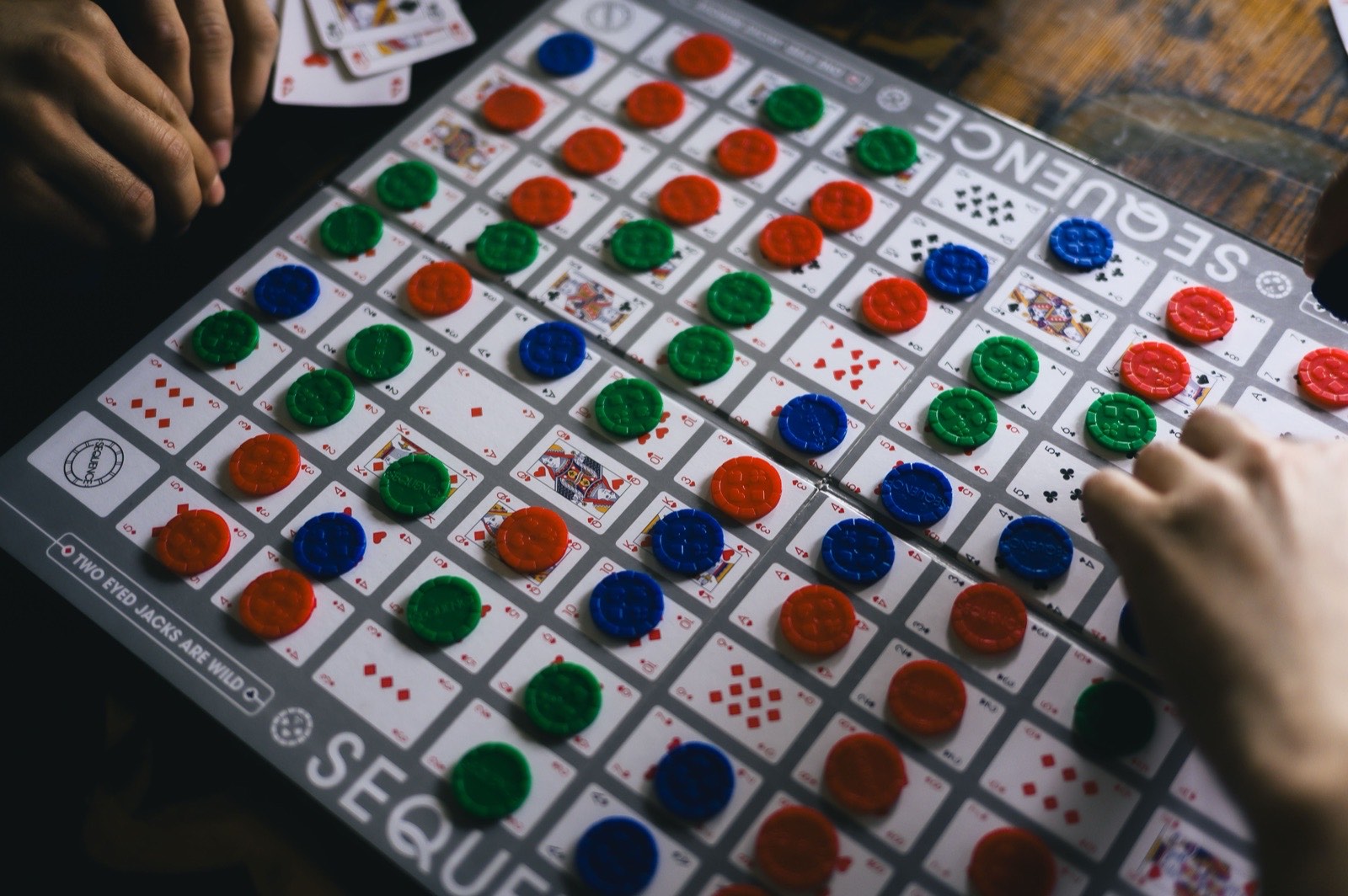
For anyone who has never seen a Sequence board
The short version: play a card from your hand, place a chip on the board space that matches it, and try to line up five of your own chips in a row before anyone else does. If you want the full breakdown of wild jacks, free corners, and how to actually open a game well, we already wrote a separate rules and strategy guide for Sequence. This post is about what we built, not how to play it.
Why the board reshuffles every single game
The physical Sequence board has one fixed printed layout, the same arrangement of card spaces every single time you unfold it. Play it enough times with the same group and people start remembering where certain cards sit relative to the corners before the game even starts. Since this version is not printed on cardboard, there was no reason to keep that layout fixed. Every new game deals a fresh random arrangement, so the card-to-space mapping is never the one you have memorized from your last ten games.
What that actually changes about opening strategy
Some of the strategy experienced physical-board players rely on comes from knowing exactly where key cards sit relative to the free corners before a single chip is placed. A reshuffled board resets that advantage every game, so the opening few moves get read fresh instead of played from memory. That does not remove strategy from the game, it just moves more of it into the actual game in front of you instead of pre-game knowledge of a layout you have seen a hundred times before.
2 and 3 player modes, the same familiar chips
Sequence supports 2 players (or teams) needing 2 completed Sequences to win, or 3 players (or teams) needing just 1. The chip colors match the physical game exactly: red, green, and blue, so anyone who already owns a board recognizes the palette immediately instead of learning a new visual language on top of the rules they already know.
Built to feel familiar, not to reinvent it
Everything else stays exactly as the physical game defines it: two-eyed Jacks are wild and place a chip anywhere, one-eyed Jacks remove an opponent chip that is not already part of a completed Sequence, all four corners are free for every player, and a card with no legal space left can be discarded for a fresh one. The randomized layout is the one deliberate departure from the board you already know. Everything else was built to feel like the same game, not a reinterpretation of it.
Does the random layout change how many sequences you need to win?
No. The win condition stays exactly the same as standard rules, 2 completed Sequences for 2 players or teams, 1 for 3. Only the card-to-space mapping on the board changes from game to game, never the rules for actually winning.
Do I need to already know the physical board game to play this?
No. The interface highlights every legal space for the card you have selected, so a newcomer who has never touched a physical Sequence set can pick up the rules by playing rather than by reading a rulebook first.
If you already own the physical board, the muscle memory still applies, the corners still matter, and the Jacks still work exactly the way you expect. What will not carry over is knowing where any particular card sits before the game starts, and that is entirely the point.