

Checkers Classique contre International : ce qui change vraiment entre les deux jeux de règles
Rédigé par l'équipe Playaby. Nous créons chaque jeu de ce site nous-mêmes et nous testons chacun d'eux en écrivant son guide, donc les astuces ci-dessus viennent d'une véritable prise en main des mécaniques — pas de conseils génériques.
Checkers sur ce site prend en charge deux jeux de règles différents, et si vous n'avez jamais joué qu'à l'un des deux, passer à l'autre peut donner l'impression d'un jeu entièrement différent portant le même plateau et les mêmes pions. Plutôt que de traiter l'un comme celui « par défaut » et l'autre comme un mode bonus, les deux figurent côte à côte sur le même écran de départ dès que vous ouvrez le jeu de Checkers en ligne gratuit, donc voici exactement ce qui change entre les deux.
| Aspect | Classique | Internationale |
|---|---|---|
| Taille du damier | 8x8 | 10x10 |
| Prises d'un pion normal | Vers l'avant uniquement | Vers l'avant et vers l'arrière |
| Déplacement de la dame | Une case à la fois | Vole le long des diagonales ouvertes |
| Prises | Obligatoires | Obligatoires, et les chaînes frappent plus fort |
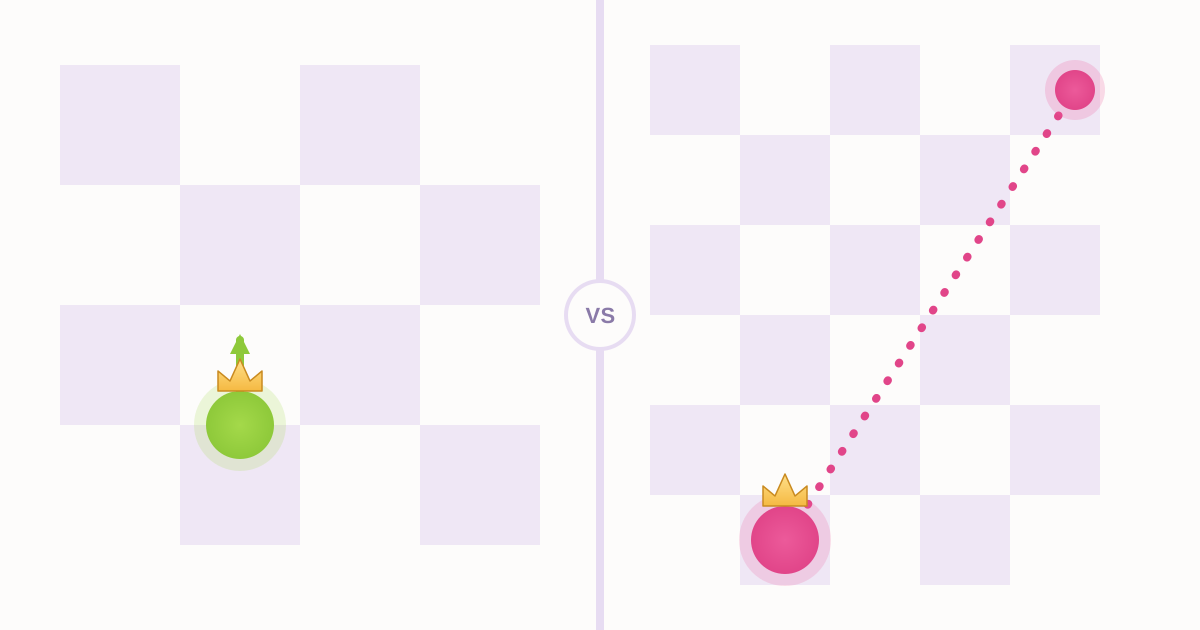
Parmi tout ça, la différence de déplacement de la dame est la plus importante en pratique. Une dame Classique, une fois couronnée, ne se déplace toujours que d'une case en diagonale, mais dans les deux directions au lieu de seulement vers l'avant. Une dame Internationale « vole » : elle peut se déplacer sur n'importe quel nombre de cases vides le long d'une diagonale en un seul tour, exactement comme un fou aux échecs. Une seule dame volante sur un damier dégagé est une pièce vraiment dangereuse en règles Internationales, d'une façon qu'une dame Classique n'égale jamais tout à fait, et c'est aussi pourquoi les chaînes de prises ont tendance à frapper plus fort en règles Internationales, puisqu'une dame volante peut balayer plusieurs prises d'affilée bien plus souvent que ne le permet le jeu de règles Classique, plus restreint.
Lequel devriez-vous vraiment jouer
Si vous voulez une partie plus courte et plus percutante qui récompense quand même le bon positionnement, commencez par le Classique. Si vous voulez une session plus longue et plus tactique où une seule dame volante peut faire basculer tout le damier, passez à l'International. Aucun des deux n'est le « mode facile », ils sont simplement assez différents pour que la plupart des joueurs finissent par avoir une vraie préférence une fois qu'ils ont essayé les deux. Le seul moyen de le savoir avec certitude est de jouer aux Checkers contre l'ordinateur dans les deux jeux de règles, l'un après l'autre.
Une chose à savoir avant de commencer : on ne peut pas changer de jeu de règles en cours de partie, puisque les deux utilisent des tailles de damier différentes, et il n'y a aucun moyen sensé de redimensionner un damier 8x8 à moitié terminé en un 10x10, ou l'inverse. Choisir un jeu de règles démarre une nouvelle partie, de la même façon qu'on se met d'accord sur une variante avant de s'installer devant un plateau physique plutôt qu'en pleine partie. Aucun des deux jeux de règles n'est plus « correct » que l'autre, ce sont simplement des jeux véritablement différents partageant les mêmes pions et la même logique diagonale, et l'autre mérite d'être essayé au moins une fois avant de décider lequel vous préférez vraiment.
La règle de prise vers l'arrière que les gens ratent le plus
La différence entre prise vers l'avant et prise vers l'arrière attire moins l'attention que les dames volantes, mais elle change tout autant la façon dont se déroulent l'ouverture et la mi-partie. En règles Classiques, un pion non couronné ne peut jamais capturer qu'en avançant, ce qui veut dire qu'un pion poussé profondément en territoire ennemi sans soutien est relativement à l'abri de tout ce qui se trouve derrière lui — rien ne peut le prendre par l'arrière tant qu'il n'est pas couronné. Les règles Internationales suppriment entièrement ce filet de sécurité : n'importe quel pion, couronné ou non, peut capturer dans les deux sens dès qu'une prise est possible. Ce seul changement veut dire que des poussées agressives qui seraient parfaitement sûres en règles Classiques peuvent tomber tout droit dans une prise par l'arrière en règles Internationales, ce qui est exactement le genre d'habitude qui se transpose mal entre les deux versions si on n'est habitué qu'à une seule des deux.
La règle de la prise multiple obligatoire amplifie encore cette différence. Dans les deux jeux de règles, si une prise est possible, vous devez la faire — ça, c'est partagé. Mais les règles Internationales exigent aussi de continuer à prendre avec le même pion tant qu'une autre capture est possible dans le même tour, ce qui peut parfois retirer trois ou quatre pions du damier en un seul coup. Les règles Classiques plafonnent généralement les dégâts d'un tour à la prise simple ou double disponible à cette position précise. Cette seule différence explique pourquoi une mise en place négligente sur le damier International coûte généralement bien plus cher que la même erreur sur un damier Classique.
Rien de tout cela ne rend l'International strictement plus difficile au point de décourager un joueur Classique de l'essayer. Ça récompense simplement un genre de prudence légèrement différent — considérez chaque pion comme capturable depuis n'importe quelle direction, et pensez en termes de chaînes entières plutôt qu'en prises isolées avant de vous engager sur un coup.