

Chip Line ist jetzt live auf Playaby: Bei jeder Partie ein anderes Brett
Geschrieben vom Playaby-Team. Wir entwickeln jedes Spiel auf dieser Seite selbst und spielen es komplett durch, bevor wir die Anleitung dazu schreiben — die Tipps oben stammen also aus echtem Testen der Mechaniken, nicht aus allgemeinen Ratschlägen.
Dieselben Chips, dieselben Buben — aber das Brett ist nie das, das du auswendig gelernt hast.
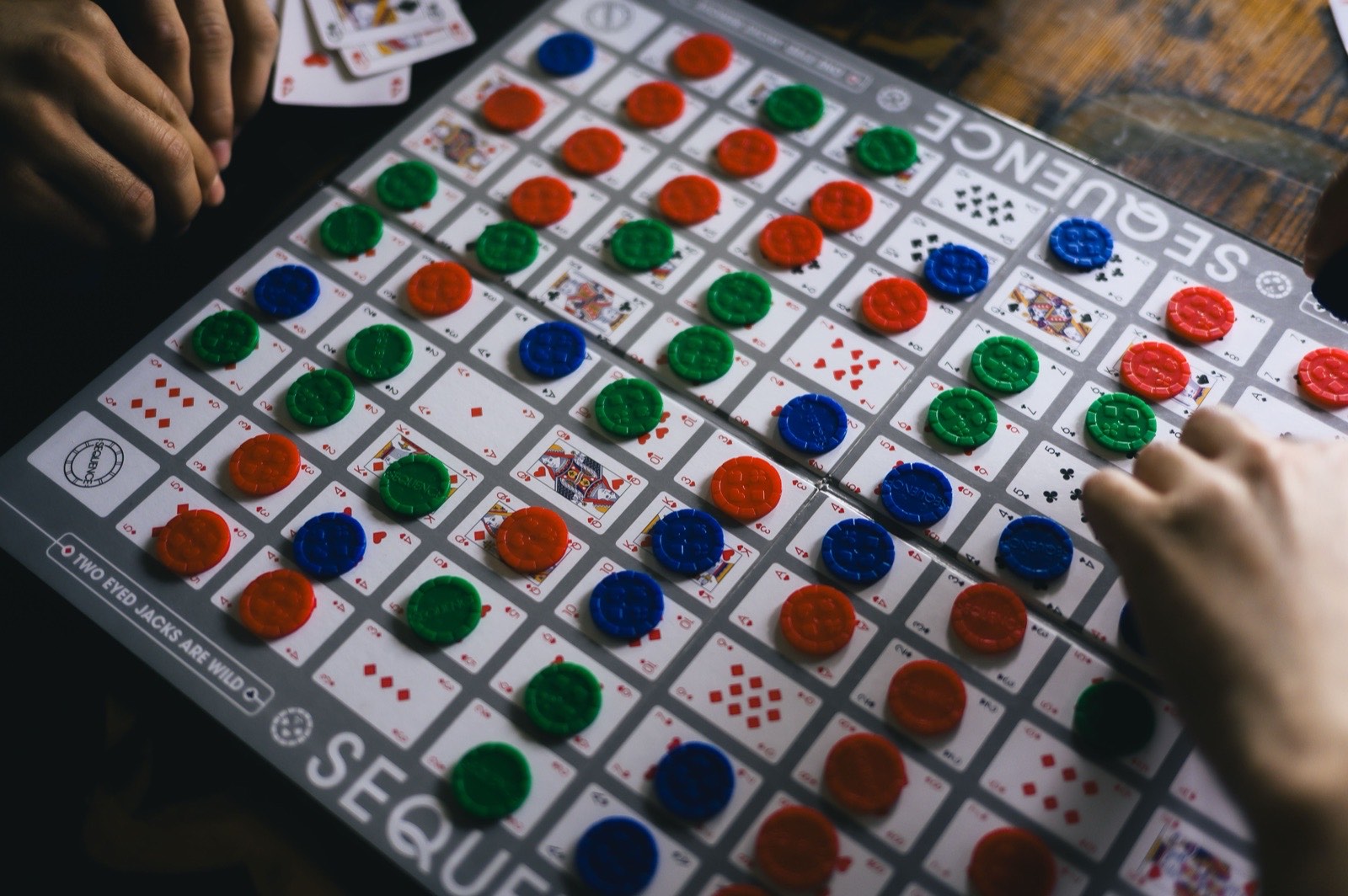
Chip Line ist gerade der Bibliothek beigetreten. Wenn du diese Art von Chip-und-Karten-Brettspiel schon mal gespielt hast, hält diese Version fast alles am Format intakt. Fast alles, denn es gibt eine bewusste Änderung: Das Brett selbst ist nie zweimal dasselbe.
- Ein frisches, zufällig angeordnetes Brett bei jeder einzelnen Partie, sodass die Karte-zu-Feld-Zuordnung nie eine ist, die du auswendig kennst
- 2-Spieler- oder 2-Team-Modus, bei dem 2 abgeschlossene Chip Lines zum Sieg nötig sind
- 3-Spieler- oder 3-Team-Modus, bei dem nur 1 abgeschlossene Chip Line zum Sieg reicht
- Klassische Chip-Farben: Rot, Grün und Blau
- Zweiäugige Buben sind Joker und platzieren überall, einäugige Buben entfernen einen gegnerischen Chip, der noch nicht Teil einer abgeschlossenen Chip Line ist, alle vier Ecken sind frei, und eine Karte ohne verbleibendes legales Feld kann gegen eine neue abgeworfen werden
Ein festes gedrucktes Brett hat ein Layout, spielt man es also oft genug mit derselben Gruppe, fangen die Leute an, sich zu merken, wo wichtige Karten relativ zu den Ecken liegen, noch bevor ein Chip platziert ist. Hier gibt es keine Pappe, also gibt es keinen Grund, dieses Layout fest zu lassen — ein neu gemischtes Brett setzt dieses Vorwissen jedes Mal zurück, was Chip Line nicht die Strategie nimmt, sondern nur mehr davon in das Spiel verlagert, das tatsächlich vor dir liegt.
Nichts davon rührt an die Gewinnbedingung: Es sind weiterhin 2 abgeschlossene Chip Lines für 2 Spieler oder Teams, 1 für 3, genau wie beim Standardformat — nur die Karte-zu-Feld-Zuordnung ändert sich, nie das, was zum Sieg nötig ist. Und du brauchst auch keine Vorerfahrung mit dieser Spielart, um einzusteigen: Die Oberfläche hebt jedes legale Feld für die gerade gewählte Karte hervor, sodass Neulinge durchs Spielen lernen können, statt zuerst ein Regelbuch zu lesen. Wenn du dieses Format schon gespielt hast, gilt das Muskelgedächtnis weiterhin, die Ecken zählen weiterhin, und die Buben funktionieren weiterhin genau so, wie du es erwartest. Was sich nicht überträgt, ist zu wissen, wo eine bestimmte Karte vor Spielbeginn liegt — und genau das ist der Sinn der Sache.
Warum das Brett neu mischen, statt es nur als Option anzubieten
Der naheliegende Mittelweg wäre gewesen, beides anzubieten — ein festes klassisches Layout für Spieler, die die vertraute Version wollten, und ein gemischtes als separaten Schalter. Diese Idee wurde recht früh verworfen. Die Spielerbasis auf zwei Brettvarianten aufzuteilen lässt jede einzelne Variante weniger fertig wirken, und ein gemischtes Brett kostet die feste Layout-Version eigentlich nichts Nennenswertes. Die Ecken-Strategie, die Buben, die Gewinnbedingung — nichts davon hängt davon ab, zu wissen, wo eine bestimmte Karte auf dem gedruckten Brett liegt, also entfernt das Neumischen eine Form von auswendig gelerntem Wissen, ohne die tatsächliche Fähigkeit anzutasten, die das Spiel belohnt.
Die 2- und 3-Spieler-Modi brauchten außerdem separate Abstimmung, statt sich einen hoch- oder runterskalierten Zahlensatz zu teilen. Bei 2 Spielern 2 abgeschlossene Chip Lines zu brauchen verhindert, dass eine Partie zu abrupt bei der allerersten starken Linie endet, die jemand baut, während das Absenken dieser Anforderung auf 1 abgeschlossene Chip Line bei 3 Spielern berücksichtigt, wie viel schneller sich das Brett füllt, sobald ein dritter Satz Chips darauf herumfliegt. Beide Zahlen gegeneinander zu testen war der schnellste Weg, um bei Zahlen zu landen, die sich richtig anfühlten, statt aus dem physischen Regelbuch zu raten und anzunehmen, es würde sich sauber auf eine Version mit zufälligem Brett übertragen.
Wie funktionieren Solo- und Online-Modi?
Chip Line bietet CPU-Spiel und Online-Räume. Gegen CPUs steuerst du eine Hand, die anderen Plätze sind computergesteuert. Für menschliche Gegner lade ein oder zwei Freunde auf eigenen Geräten in einen Raum ein. Jeder sieht seine eigene Hand. Diese Version hat keinen Modus zum Weiterreichen eines gemeinsamen Geräts.