

Chip Line: Spielregeln und Strategie für Einsteiger
Geschrieben vom Playaby-Team. Wir entwickeln jedes Spiel auf dieser Seite selbst und spielen es komplett durch, bevor wir die Anleitung dazu schreiben — die Tipps oben stammen also aus echtem Testen der Mechaniken, nicht aus allgemeinen Ratschlägen.
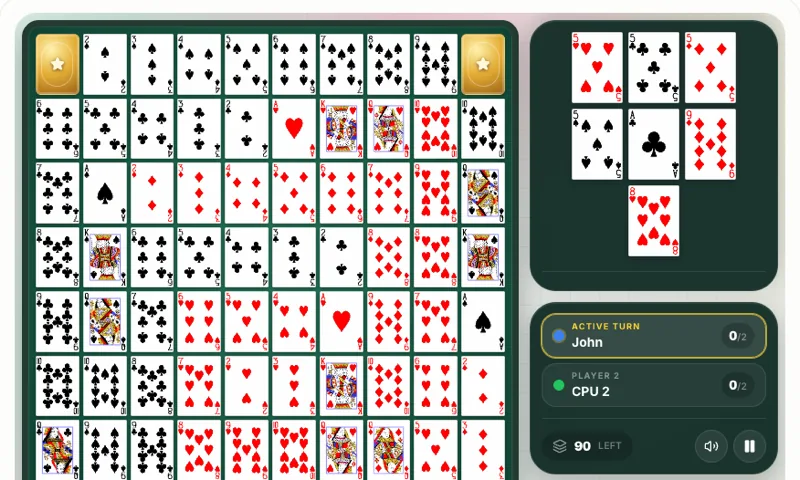
Über Chip Line wird nicht so oft gesprochen wie über Dame oder Schach, aber es ist eines der cleverer gemachten Hybridspiele da draußen: halb Kartenspiel, halb Brettspiel, mit einem gemeinsamen Brett, auf dem beide Hälften zusammentreffen. Wenn du es noch nie gespielt hast, wirken die Regeln beim ersten mündlichen Erklären etwas verworren. Auf einem Bildschirm, mit automatisch hervorgehobenen legalen Feldern, versteht man es viel schneller. Statt es Abschnitt für Abschnitt durchzugehen, hier das Ganze als Fünf-Schritte-Übersicht, mit den beiden merkwürdigen Ausnahmen extra herausgestellt, damit sie nicht in der Mitte untergehen.
- Kenne die Gewinnbedingung: Bilde die geforderte Anzahl an Chip Lines, also fünf eigene Chips in einer Reihe, auf dem gemeinsamen Brett. Reihen können horizontal, vertikal oder diagonal verlaufen, wie bei den meisten Verbinde-die-Linie-Spielen.
- Verstehe, wie eine Karte einen Chip aufs Brett bringt. Jede Karte im Deck entspricht zwei getrennten Feldern auf dem Brett (da das Brett über sein Layout hinweg zwei volle Kartendecks abbildet), sodass das Spielen einer Karte aus deiner Hand dir erlaubt, einen Chip auf eines der beiden passenden Felder zu legen. Du wählst nicht frei, wo ein Chip platziert wird — du wählst, welche Karte du spielst, und das Brett sagt dir, wohin diese Karte darf.
- Nutze die freien Ecken. Jede Ecke des Bretts ist ein freies Feld, das für jeden Spieler zählt, ohne dass es eine Karte oder einen Chip braucht, was bedeutet, dass jeder Spieler faktisch mit einem kleinen Vorsprung auf eine diagonale Chip Line durch die nächstgelegene Ecke startet. Neue Spieler ignorieren die Ecken früh im Spiel oft und bereuen es später, sobald ein Gegner still und heimlich drei Chips auf eine Ecke zu gebaut hat, die ohnehin immer kostenlos zu seinen zählen würde.
- Prüfe, wie viele Chip Lines du tatsächlich brauchst. Bei zwei Spielern oder zwei Teams brauchst du zwei abgeschlossene Chip Lines zum Sieg. Bei drei Spielern oder drei Teams reicht eine einzige Chip Line, da sich das Brett schneller füllt, wenn mehr Chips gleichzeitig im Spiel sind, und eine einzelne Chip Line proportional schwerer zu arrangieren wird.
- Committe dich zu einer Richtung, statt dich zu verzetteln. Widerstehe früh im Spiel dem Drang, deine Chips gleichmäßig über das Brett zu verteilen. Es fühlt sich an, als hielte es dir Optionen offen, bedeutet aber eigentlich nur, dass du mehrere halbfertige Linien statt einer starken hast. Wähle eine grobe Richtung, meist auf eine freie Ecke zu, da sie dir einen Vorsprung gibt, und setze deine ersten mehreren Chips auf diese eine Linie, bevor du dich verzweigst.
Ausnahme: die beiden Buben
Buben sind die Joker von Chip Line, aber welche Farbe du ziehst, spielt eine Rolle — es ist keine einfache Rot/Schwarz-Aufteilung. Zweiäugige Buben (Kreuz und Karo) sind reine Joker: Spiele einen und platziere einen Chip auf einem beliebigen freien Feld des gesamten Bretts. Einäugige Buben (Pik und Herz) tun das Gegenteil: Statt einen Chip zu platzieren, erlauben sie dir, den Chip eines Gegners von einem beliebigen Feld zu entfernen, solange dieser Chip nicht bereits Teil einer abgeschlossenen Chip Line ist. Einen einäugigen Buben zurückzuhalten ist oft als Drohung wertvoller, als ihn früh tatsächlich einzusetzen, da dein Gegner um die Möglichkeit herumspielen muss, dass du seinen Fortschritt zerstörst.
Ausnahme: keine legale Karte zum Spielen
Wenn keine deiner Karten ein legales freies Feld hat (jedes passende Feld auf dem Brett ist bereits belegt), kannst du diese Karte abwerfen und eine Ersatzkarte ziehen, statt festzustecken. Es ist eine kleine, aber wichtige Regel, denn ohne sie könnte dich eine schlechte Hand spät im Spiel sonst völlig handlungsunfähig machen.
- Spiele früh auf eine freie Ecke zu, um dir einen „Chip" zu sichern, den du nie platzieren musstest.
- Halte einen einäugigen Buben als Drohung zurück, statt ihn sofort beim Ziehen einzusetzen.
- Achte auf Gegner, die still auf eine Ecke hinbauen, und erwäge, das zu zerstören, bevor es sich vollendet.
- Konzentriere deine frühen Chips auf eine Richtung, statt dich dünn über das Brett zu verteilen.
Das Brett lesen, sobald es sich zu füllen beginnt
Früh im Spiel wirkt fast jeder Zug vernünftig, weil so viel freies Brett vorhanden ist, dass sich noch nichts dringend anfühlt. Das ändert sich schnell, sobald das Brett halb voll ist. Gewöhne dir an, vor jedem eigenen Zug nach einem Gegner mit bereits drei aufgereihten Chips zu scannen — drei in einer Reihe mit einem freien Feld an jedem Ende ist eine echte Bedrohung, kein Zufall, und es ist viel günstiger, bei drei Chips zu stören, als zu versuchen, eine fertige Linie im Nachhinein zu zerstören. Kannst du keinen Chip platzieren, der sie direkt blockiert, such nach einer Karte, mit der du schnell genug eine eigene konkurrierende Bedrohung aufbaust, um deinen Gegner zur Verteidigung zu zwingen, statt seine zu vollenden.
Die Zwei- und Dreispieler-Versionen belohnen tatsächlich leicht unterschiedliche Instinkte. Bei zwei Spielern, die jeweils zwei Chip Lines brauchen, zieht sich das Spiel eher in die Länge, und es lohnt sich, eine langsamere, defensivere Eröffnung zu akzeptieren, da Zeit bleibt, sich von einem mittelmäßigen Start zu erholen. Bei drei Spielern, die jeweils nur eine Chip Line brauchen, läuft das Spiel viel schneller, und eine einzige unbemerkte Dreierreihe kann die Runde beenden, bevor du überhaupt reagieren konntest, weshalb das Scannen des Bretts bei jedem einzelnen Zug noch mehr zählt als sonst.
Chip Line belohnt einen geduldigen Ansatz in eine Richtung weit mehr, als es das Greifen nach jedem gerade offen wirkenden Feld belohnt. Sobald die Ecken-Strategie und die beiden Buben verstanden sind, geht es im Rest des Spiels meist darum, zu erkennen, welche Linie dein Gegner still aufbaut, und zu entscheiden, ob es sich lohnt, sie zu zerstören, bevor er sie vollendet.