

Devil Trap Levels 1–40: A Guide to the Trap Progression
Written by the Playaby team. We build every game on this site ourselves and play through each one while writing its guide, so the tips above come from actually testing the mechanics — not generic advice.
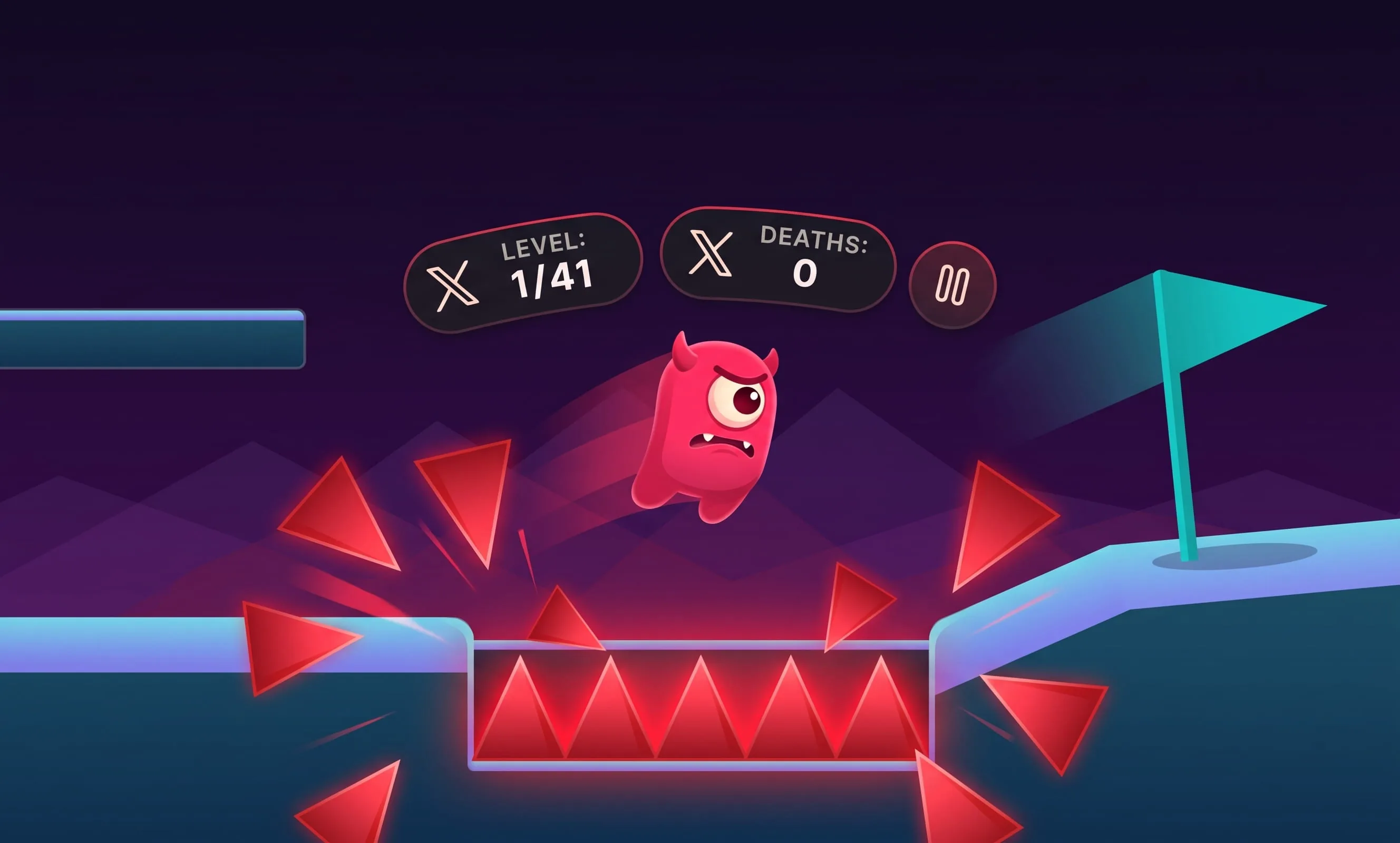
Devil Trap has 40 hand-authored levels, and the difficulty comes from how the hazards are combined rather than from simply making every jump longer. The level map is progressive: clearing a level unlocks the next one, while cleared levels stay available for practice. If you are ready to test the first trap, play Devil Trap online before reading the rest of this guide.
How Devil Trap levels get harder
The opening levels teach one deceptive idea at a time. Later levels make you carry two or three ideas together: a safe-looking floor may crumble, a moving platform may be pushed by wind, and a delayed spike trigger may activate while you are already planning the next jump. The game rarely asks for a perfect reaction without giving you a clue first; it asks whether you noticed the clue.
| Levels | Main lesson | Best mindset |
|---|---|---|
| 1–3 | Crumbling floors, decoy platforms, and the first fake flag | Test the path before committing to a full-speed run. |
| 4–10 | Swinging crushers, movers, wind, delayed spikes, and disguised tiles | Watch timing and keep moving after every landing. |
| 11–20 | Longer gaps, repeated triggers, falling rocks, fog, and mixed hazards | Read the whole room before you cross the first danger. |
| 21–30 | Chains of traps, crusher corridors, wind gaps, and multi-step routes | Treat each landing as a setup for the next decision. |
| 31–40 | Dense combinations that remix the earlier tricks | Stay patient; the final levels reward recognition more than speed. |
Levels 1–10: learn not to trust the floor
Two Floors introduces a cracked crossing and a delayed floor-spike trigger. Trust Nothing follows with a platform that looks usable but is a decoy. The Fake Flag then teaches that reaching a flag-shaped object is not always the same as finishing. By level 10, The Copycat has already taught the important distinction between a real crumble tile and a solid tile that only looks cracked. That is the foundation for the rest of the game: appearance is evidence, not proof.
Levels 11–20: read the room before you move
Rising Panic and The Long Fall add more space between decisions, while Squeeze, Blind Trust, and No Rest combine decoys, moving platforms, triggers, and crushers. The Devil’s Choice makes a long gap depend on a moving platform, and Descent Into Madness adds fog, falling rocks, and several hazard types at once. Before these levels, it is tempting to react to whatever is directly in front of the character. Here, you need to scan the next landing before you leave the current one.
Levels 21–30: survive combinations, not surprises
No Safety Net turns the crumble-floor lesson into a chain. Double Ambush and Crusher Corridor ask you to keep your timing steady through several hazards instead of celebrating the first safe landing. The middle of the map is where a short pause becomes useful: stop on solid ground, let the moving hazard reveal its rhythm, then make one deliberate attempt. That small reset is often safer than trying to improvise through the whole corridor.
Levels 31–40: what changes near the end?
The final ten levels do not introduce a completely new control scheme. They remix the game’s vocabulary: crossfire, reflex corridors, double crushers, storm sections, trust-fall jumps, tight hairpins, and the final Judgment Day run. The challenge is remembering which visual signals are reliable while several timers are active. If one late level is costing you too many deaths, replay an earlier level with the same hazard family, then return with that timing fresh.
Can you replay cleared Devil Trap levels?
Yes. Clearing a level unlocks the next stage, and cleared stages remain selectable from the level map. Your cleared-level progress and best death count are saved locally in the browser, so replaying an earlier stage is useful for practice as well as for improving your run.
Are Devil Trap levels randomly generated?
No. The 40 levels are hand-authored, which is important for a trap platformer: each hazard combination is placed to punish a specific assumption and still leave a readable route. Some falling rocks use randomized timing during a run, but the level layout itself is authored. For trap-by-trap advice, continue with the Devil Trap tips and tricks guide.