
قصة إضافة Color Cards ثلاثية الأبعاد إلى Playaby
بقلم فريق Playaby. نصمم كل لعبة على هذا الموقع بأنفسنا ونلعبها كاملة أثناء كتابة دليلها، فالنصائح أعلاه تأتي من تجربة فعلية للآليات — لا من نصائح عامة.
تبدو Color Cards بسيطة جدًا لدرجة يصعب معها تبرير قضاء وقت تطوير حقيقي عليها، إلى أن تحاول فعلاً إجلاسك أنت وحتى تسعة خصوم يتحكم بهم الذكاء الاصطناعي حول طاولة واحدة مشتركة وإبقاء الأمر برمته مفهومًا. تلك المشكلة، أكثر من قواعد الأوراق نفسها، هي ما شكّل فعلاً طريقة بنائها لـPlayaby.
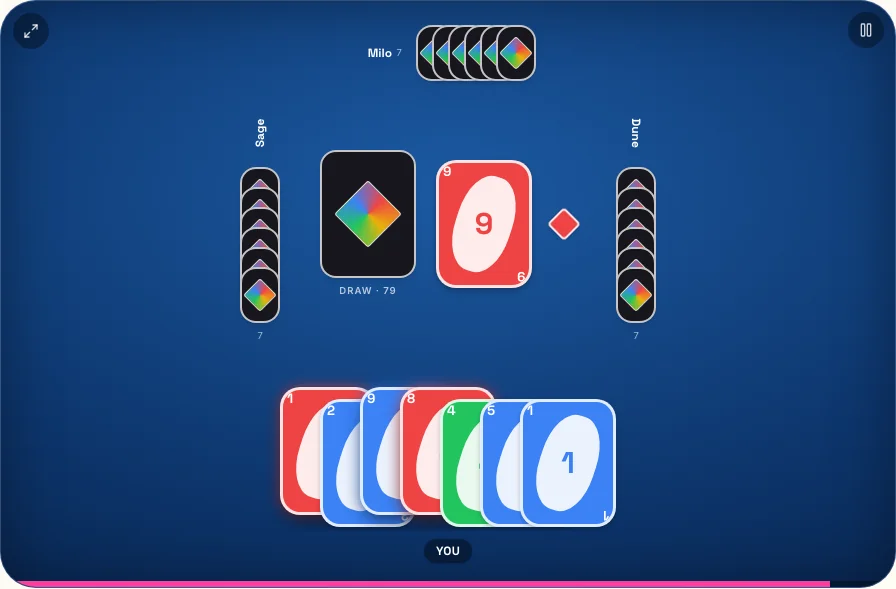
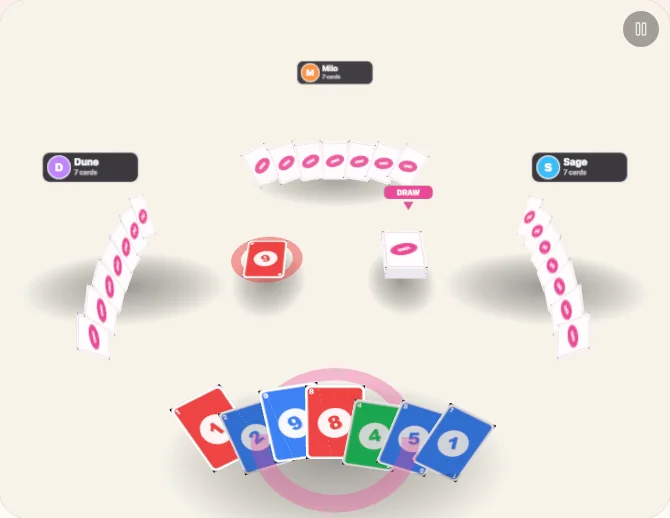
- لماذا لا نكتفي بطاولة ورق ثنائية الأبعاد مسطحة: تستخدم معظم ألعاب الأوراق القائمة على مطابقة الألوان التي ستجدها عبر الإنترنت تخطيطًا مسطحًا بسيطًا — يدك في الأسفل، والجميع ممثَّلون كأكوام صغيرة من بطاقات مقلوبة حول حواف الشاشة. يعمل هذا جيدًا مع أربعة لاعبين. يصبح مزدحمًا وصعب التتبع بسرعة بمجرد أن تقترب من ثمانية أو تسعة خصوم، وهو النطاق بالضبط الذي أردنا دعمه. منحت الطاولة ثلاثية الأبعاد كل مقعد موضعه الفعلي الخاص ومسافته من المركز، بدلاً من حشر أيقونات أكثر في الشريط المسطح نفسه.
- لماذا حد المقاعد هو عشرة: تسع الطاولة عشرة مقاعد إجمالاً، أي أنت بالإضافة إلى ما يصل إلى تسعة خصوم يتحكم بهم الكمبيوتر، ولم يكن هذا الرقم عشوائيًا. أقل من ذلك ويكاد الأمر لا يختلف عن لعبة ورق عادية. ادفع أعلى من ذلك بكثير وتبدأ حتى الطاولة ثلاثية الأبعاد بالشعور بالازدحام، بمقاعد متقاربة بما يكفي بحيث يتوقف تمييز اللاعبين من نظرة واحدة عن كونه سهلاً. بدت عشرة هي السقف حيث لا تزال الطاولة تُقرأ بوضوح بنظرة واحدة.
- لماذا كان الإجلاس الديناميكي لكل عدد لاعبين أصعب من المتوقع: احتاج كل عدد لاعبين من اثنين حتى عشرة إلى ترتيب إجلاس خاص به، لا مجرد نسخة مصغّرة من تخطيط العشرة مقاعد. يحتاج عدد أقل من اللاعبين تباعدًا أكبر لتجنب الظهور متناثرًا وغير متناسق، بينما يحتاج عدد أكبر منهم مقاعد أكثر تقاربًا وموزّعة بالتساوي لا تزال تترك مركز الطاولة خاليًا لأكوام السحب والتخلص. جعل هذا التوازن يبدو مقصودًا عند كل عدد لاعبين بعينه، لا صحيحًا فقط عند الحدين المتطرفين، استغرق تكرارًا أكثر مما استغرقه منطق الأوراق الفعلي.
- لماذا احتاجت ألوان البطاقات إلى البقاء صادقة من كل زاوية: تحتاج ألوان البطاقات إلى أن تُقرأ بشكل صحيح من أي زاوية كاميرا وأي مقعد، لا من الأعلى مباشرة فقط. تحت الإضاءة والمنظور الحقيقيين، يمكن لبطاقة حمراء أن تتلاشى أو تتغيّر بسهولة حسب الزاوية التي تُشاهد منها، وهو أمر يبدو بسيطًا إلى أن يصبح لاعب عاجزًا فعلاً عن معرفة ما إذا كانت بطاقة في يده حمراء أو درجة مختلفة قليلاً تمامًا. تسطيح التظليل بحيث تبقى الألوان صادقة بغض النظر عن المقعد أو الزاوية كان أهم لقابلية اللعب الفعلية من معظم التفاصيل البصرية الفاخرة.
تفصيل متعمد آخر لم يظهر في قائمة قرارات التصميم لأنه يتعلق بالسلوك، لا التخطيط: يتذكر خصوم الكمبيوتر عادة الإعلان عن ورقتهم الأخيرة في اللحظة التي يصلون فيها إلى بطاقة واحدة، بنفس الطريقة التي تتطلبها القواعد من لاعب بشري، لكن ليس دائمًا. تركهم قابلين للإمساك بهم أحيانًا، بنفس الطريقة التي قد ينسى بها صديق حقيقي، يفعل أكثر لشعور اللعبة الفعلي من جعل كل خصم مثاليًا بلا عيوب.
ما ليست عليه اللعبة (بعد)
كل مقعد باستثناء مقعدك مشغول بخصم يتحكم به الكمبيوتر، لا شخص حقيقي على جهاز آخر — هذا لعب فردي ضد الذكاء الاصطناعي على طاولة كاملة، لا لعب جماعي عبر الشبكة بين الأصدقاء. الحفاظ على تزامن حالة اللعبة في الزمن الحقيقي عبر أجهزة متعددة مشروع تقني مختلف فعلاً عما أُطلق هنا، وليس شيئًا نعِد بقدومه. إنها مع ذلك الميزة الأكثر طلبًا التي سمعناها منذ الإطلاق.
هل أحتاج إلى أشخاص آخرين، أو اتصال بالإنترنت، للعب مباراة كاملة بعشرة مقاعد؟
لا. بما أن كل مقعد باستثناء مقعدك خصم يتحكم به الكمبيوتر، يمكنك بدء طاولة كاملة بمفردك، وتعمل اللعبة بالكامل في متصفحك دون الحاجة لوجود أي شخص آخر متصلاً بالإنترنت في الوقت نفسه.
لا شيء من هذا يجعل Color Cards أكثر تعقيدًا للعب فعليًا — القواعد هي بالضبط ما تتوقعه، وصولًا إلى زر "الورقة الأخيرة!" مخصص (باختصار لوحة مفاتيح) يظهر في اللحظة التي تصل فيها إلى ورقتك الأخيرة، بحيث يمكنك إعلانه في اللحظة التي تتطلبها القاعدة بدلاً من التخبط بحثًا عنه تحت الضغط. ما تغيّر هو كل شيء تحت تلك القواعد: عدد الخصوم الذي يمكن أن تستوعبه الطاولة، وكيف تبقى مفهومة عند كل عدد مقاعد، وكيف ضُبط الذكاء الاصطناعي ليشعرك أنه أقل شبهًا بآلة مثالية وأقرب لكونه جالسًا فعلاً على الطاولة معك.